
Inside a Blue Ridge, GA Mountain Wedding — How One Couple Said I Do in the Trees
There was a moment late in the ceremony, with the Toccoa River moving quietly somewhere below and the trees closing in overhead like a cathedral, where I stopped thinking about exposure and just watched. Some weddings have a stillness to them that doesn’t happen by accident — it happens because the place earns it.
Blue Ridge sits at the top of Fannin County, pressed against the Tennessee border, and it has a particular mountain character that separates it from other North Georgia destinations. The town is beloved — the Blue Ridge Scenic Railway, the restaurants on Main Street, the proximity to Lake Blue Ridge — but it’s the land outside of town that makes couples drive three hours from Atlanta to get married here. The Blue Ridge Mountains in this corner of Georgia are older and deeper-feeling than the foothills to the south. The ridgelines are sharper. The valleys are narrower. The hardwood forest is dense and layered, and in fall the canopy colors don’t just happen above you — they happen around you, wrapping the ceremony space in a way that feels almost private. Cabin rental venues here give couples and their guests something no hotel can replicate: a two-day immersive experience in the mountains. The wedding doesn’t end when the reception closes — it continues into a shared morning on the porch, coffee and mountains and the sound of the river.
How the Forest Changes the Way I Photograph
Photographing under a forest canopy requires a different approach than photographing in open fields or bright reception halls. The light is filtered and directional — beautiful, but you have to know how to find it and position people within it. At Blue Ridge venues, I’m constantly reading where the light is breaking through and whether that light is warm and usable or harsh and midday-flat. In late afternoon in fall, the low angle of the sun sends shafts through the trees that are genuinely extraordinary — the kind of light that painters try to recreate. Catching those moments requires knowing when they’re coming. I’ve watched enough North Georgia afternoons to know that the window is real and specific. During full midday sun, I move couples to shaded spots with open sky overhead — that overcast-style diffusion you find in deep forest is some of the most flattering light that exists for portraiture. No harsh shadows. Soft definition. Skin tones that are rich and accurate. The forest essentially becomes a giant softbox, and I work within it rather than against it.
The Toccoa River — if your venue has access to it — is worth every minute of the walk. Moving water in the background adds a quality of depth that static scenery can’t replicate. The sound of it in the reception audio is a detail couples only notice later, in the videos, and they love it. I always push for at least a few portraits near water when it’s an option. The reflections, the texture, the color that water picks up from the sky above — it’s earned, every time.
What I Tell Blue Ridge Couples Before the Wedding Day
Logistics at mountain venues require honesty and planning. Blue Ridge is farther from population centers than, say, Canton or Cartersville, which means guests traveling from Atlanta are committing to a real drive — sometimes two and a half to three hours depending on traffic. Build your timeline with that reality in mind. If guests are arriving at a cabin complex, they need time to settle, find their rooms, and get their bearings before the ceremony begins. I usually recommend padding an extra 30 minutes into every transition at cabin-style venues. For photography specifically, I want to know the venue layout before the day — is the ceremony in the woods or on a deck? Is the reception in a barn or inside the cabin? Where does the couple have their first look? These details let me build a shot list that matches the actual geography of your day, not a generic template. Blue Ridge weather is also worth discussing. The mountains generate their own weather patterns. I’ve seen clear blue skies go grey in under an hour at elevation. That’s not a problem — overcast light is actually wonderful for portraits — but it affects which parts of the day we prioritize for outdoor portraits. Always have a rain plan, even if you never use it.
Fall color in Fannin County tends to peak slightly earlier than in lower Georgia, usually in mid to late October. If peak color is a priority, I’d aim for the third week of October and watch the forecast closely. That said, some of the most beautiful images I’ve made in Blue Ridge came on overcast November days when the leaves were mostly down and the bare trees made everything feel spare and quiet. Don’t write off late fall. It has its own kind of beauty.
“Some weddings have a stillness to them that doesn’t happen by accident — it happens because the place earns it.”
I drove up to Blue Ridge for the first time to photograph a small elopement on a Tuesday in October, and I remember thinking that I needed to come back with more time. The town has a gravitational pull — the kind of place that makes you want to sit on a porch and do nothing for two days. For weddings, that feeling translates directly into the photographs. Couples who choose Blue Ridge tend to be deliberate. They’re not choosing it because it’s convenient or trendy. They’re choosing it because it means something to them — a place they’ve hiked, a cabin they’ve rented every fall, a mountain they’ve pointed to from a ridge and said “that’s where we want to be.” That intentionality shows up in their faces and in the way they move through their wedding day. It’s a pleasure to document.
Why the In-Between Moments Matter Most in the Mountains
Mountain weddings have more in-between moments than other weddings — and I mean that as the highest compliment. Because guests are often staying on-site or nearby, the day doesn’t have hard edges the way a banquet-hall wedding does. People linger on porches. The bride finds a quiet moment in the trees. The groom and his father stand at the edge of a ridge just before the ceremony, not saying much. These are the moments that can’t be directed or manufactured. They happen because the environment invites them. My job is to be close enough to catch them without being intrusive enough to prevent them. That balance — visible but unobtrusive — is something I’ve worked on for years. When it works, you get images that look like memories rather than photographs. When you’re choosing a photographer for a Blue Ridge wedding, that’s what you’re looking for: someone who can be trusted to stay present without interrupting your day.
Ask any photographer you’re considering whether they’ve shot at cabin-style venues before. The logistics are genuinely different from estate or barn venues. Multiple buildings, uneven terrain, no single obvious “getting ready” location — these things require adaptability. Ask what they do when the light disappears entirely at 5 PM behind a ridge. Ask how they approach a ceremony in dense forest without flash. These questions matter, and a photographer with real mountain experience will answer them without hesitation.
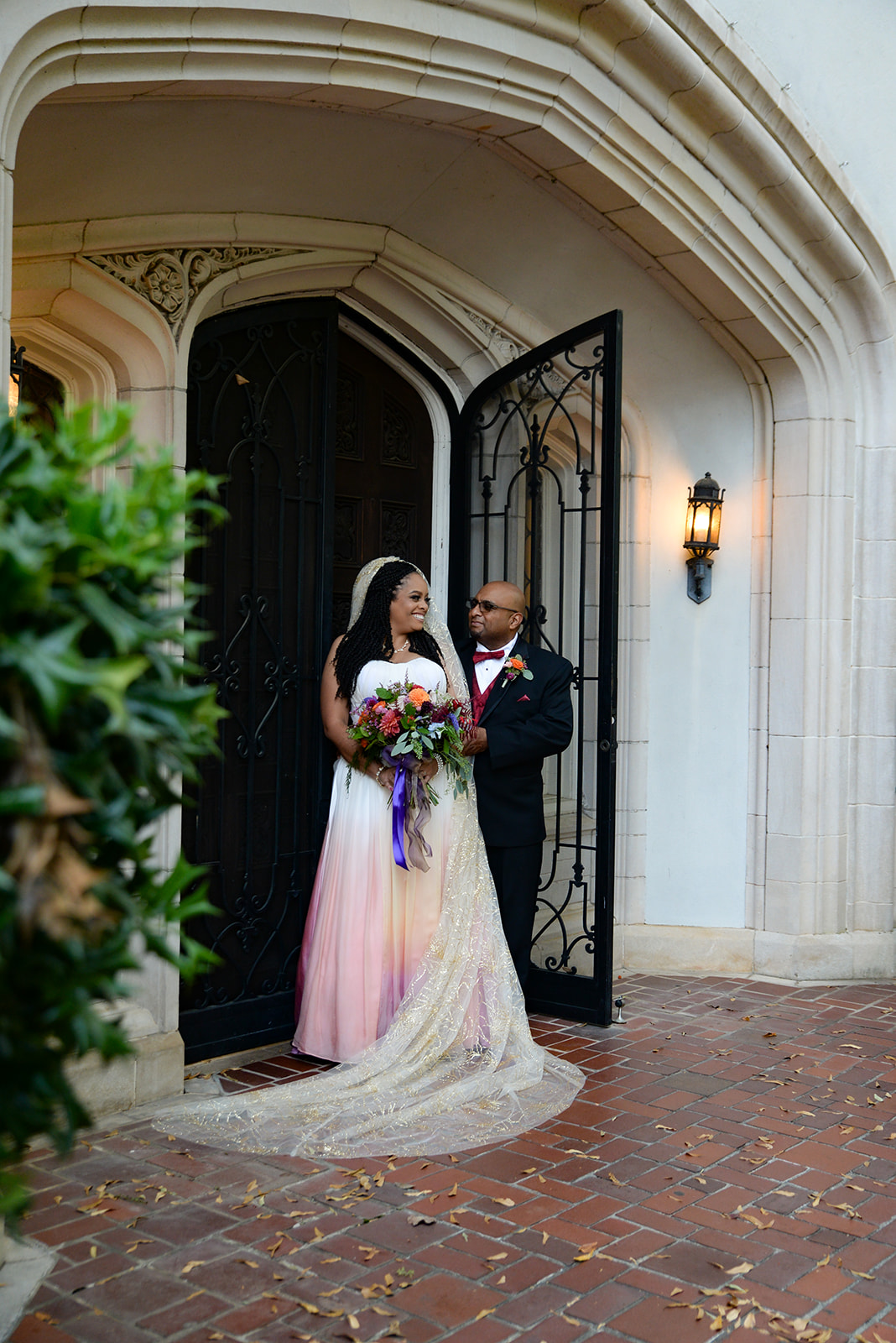
If you’re planning a wedding in Blue Ridge — or anywhere in the Fannin County mountains — I’d genuinely love to hear about it. I’m based in Calhoun, GA, which puts me about 90 minutes from Blue Ridge and deeply familiar with the mountain corridor. I travel throughout North Georgia and regularly photograph destination weddings across the Southeast. Tell me your date, your venue, and what you’re envisioning. I’ll respond with availability and everything you need to move forward.
Tiffany Greeson Photography serves couples, families, and newborns throughout Northwest Georgia and the greater Southeast, including Blue Ridge and the surrounding communities of Calhoun, Rome, Cartersville, Dalton, Canton, Chattanooga (TN), Dahlonega, Helen, Ellijay, and beyond. Available for destination weddings throughout the Southeast and nationwide.
Ready to have your wedding photographed?
Send your date, venue, and a little bit about your day. I’ll come back with availability and everything you need to know — usually within 24–48 hours.
Begin Your Inquiry