A Tunnel Hill, GA Wedding — Finding Romance in Georgia’s Oldest Railroad Tunnel
There’s a stone arch in Whitfield County that was cut by hand in 1849, and it is one of the most extraordinary portrait environments I have ever worked in. The Western and Atlantic Railroad Tunnel in Tunnel Hill, Georgia is not a wedding venue in the conventional sense — but it is the kind of place that changes what a wedding photograph can be.
Tunnel Hill sits just north of Dalton on the old Western and Atlantic corridor, a small unincorporated community in Whitfield County that most people drive past without slowing down. The tunnel itself runs 1,477 feet through Chetoogeta Mountain — the first railroad tunnel ever bored in Georgia, completed over three years of hand labor before the Civil War transformed the country it was built to connect. The stone portal at each end is original: rough-cut limestone arched in a way that looks Roman more than industrial, covered in decades of lichen and moss, surrounded by the kind of vegetation that grows when nothing disturbs it for 175 years. When you stand at the south portal and look through to the north, you see a perfect oval of light framing a slice of North Georgia landscape, and that frame — curved stone, dappled light, the world beyond — is something I think about every time I work in this part of the state. The Great Locomotive Chase passed through this tunnel in April 1862, when Union spies commandeered a Confederate train and led it on an 87-mile pursuit before they were caught. The tunnel survived that chase, the war, and every subsequent decade, and it stands today as both a heritage site and, when the light is right, one of the finest portrait backdrops in Northwest Georgia.
The Architecture of the Tunnel as a Portrait Tool
Let me explain why the tunnel works photographically, because I think it’s worth understanding rather than just asserting. The arch itself creates a natural frame — a compositional device that photographers spend years learning to use effectively in more ordinary environments. When your background is already a perfect arch, the framing problem is solved before you raise the camera. But more than the shape, it’s the light inside the tunnel that makes it extraordinary. At midday, light comes in from both ends, creating a soft, even fill from both directions with a slight directional quality depending on the time of year and the position of the sun. In late afternoon, the western portal catches warm light that fills the interior with a golden tone that I’ve seen make couples gasp when they saw their images. The rough stone walls absorb rather than reflect, so there’s no harsh bounce — just a deep, textured ambiance that wraps around the subjects in a way that studio lighting cannot fully replicate. For a couple’s portrait session, the tunnel offers something genuinely unusual: a contained environment with beautiful natural light, real architectural character, and enough depth that you can shoot toward either portal or across the interior with equal effectiveness. I typically spend 20 to 30 minutes at the tunnel during a Tunnel Hill wedding, and the images from that segment of the day are consistently among the strongest in the gallery.
The surrounding area reinforces what the tunnel offers. Tunnel Hill sits in the Valley and Ridge section of Northwest Georgia, where alternating ridges and agricultural valleys create a landscape of considerable variety within a small area. The fields in the Whitfield County bottomland have a pastoral openness that contrasts beautifully with the tunnel’s stone enclosure, and cycling between the two environments during portrait sessions produces a gallery that feels diverse without requiring the couple to travel far. The town itself has a handful of historic buildings along the old railroad corridor that add additional variety — weathered wood, iron hardware, the particular visual texture of a nineteenth-century commercial district that never got significantly updated. For couples who want their wedding photographs to feel like they were made in a specific, irreplaceable place, Tunnel Hill delivers this with a kind of effortless authority.

The Character of a Whitfield County Wedding
Weddings in the Tunnel Hill and broader Whitfield County area have a character that’s distinct from what you find in the mountain venue belt to the north or the estate venues closer to Atlanta. This is working country — carpet manufacturing built Dalton into a city, and the communities around it have the practical, unsentimental character of places where people make things with their hands. Weddings here tend to be honest in the way that communities with deep roots are honest. There’s less performance, more presence. The guests know each other. The families have history together that goes back multiple generations in some cases. The emotion at the reception isn’t performed for the room — it’s real, it’s accumulated, and it photographs in a way that carefully staged events rarely do. I find I do some of my best documentary work at weddings in this part of the state, simply because the authenticity of the day is so high. People cry because they mean it. They laugh because something is genuinely funny. They hold each other because they want to, not because someone told them to step into the light. That realness is a gift to a photographer, and Whitfield County delivers it consistently.
The Tunnel Hill Heritage Museum, which manages the tunnel site and the surrounding historic property, has been used as an event venue for a range of community gatherings over the years. For couples interested in a ceremony that incorporates the heritage site directly, conversations with the museum staff are the right starting point. The property has a pavilion and open-air areas adjacent to the tunnel that can be configured for ceremonies and small receptions. For larger celebrations, the tunnel serves as a portrait and ceremony backdrop while a private venue nearby hosts the reception — a combination that gives couples the best of both environments without compromise. I’ve worked both configurations and find that either can produce extraordinary results when the weather cooperates and the planning is solid.
“There is a stone arch in Whitfield County cut by hand in 1849, and when you stand inside it with the person you’re marrying, the light wraps around you in a way that nothing else I’ve found in Georgia can replicate.”
I’ve been photographing in Northwest Georgia long enough to know that the best locations are usually the ones that don’t appear in the mainstream wedding planning guides. Tunnel Hill is one of those locations. The couples who end up here either have a personal connection to the community or they’ve done the kind of deep research that leads you past the algorithm-driven suggestions and into the actual character of a place. Either way, they tend to arrive knowing why they chose it, and that clarity of intention makes for a different kind of wedding day — less anxious, more present, more fully inhabited. The photographs reflect that. Every time.
Seasonal Considerations and Logistics
The tunnel and its surroundings photograph well across most of the year, but there are distinct seasonal qualities worth knowing. In winter, the bare trees around the portal allow more light to enter from the sides, and the stone takes on a starker, more graphic quality that I find beautiful in black-and-white conversions. Spring brings green to the vegetation around the portal in a way that softens everything, and wildflowers sometimes appear along the embankment. Late summer is hot and humid throughout Whitfield County — most couples in this area who care about comfort choose October, November, or April through May. Fall is exceptional here: the ridge to the north catches color, the light is warm and low, and the cooling temperatures make outdoor portrait sessions genuinely pleasant for everyone. November can extend the fall light quality later than you might expect in this elevation, and I’ve had extraordinary November weddings in this area where the combination of late-fall light and the tunnel stone produced images I’d put against anything I’ve made all year.
Getting to Tunnel Hill is easy — the community sits directly off I-75, about ten minutes north of Dalton and forty-five minutes south of Chattanooga. For couples who want a rural, historic Northwest Georgia setting without the mountain driving, Tunnel Hill’s interstate access is a genuine advantage. Guests from Atlanta are looking at roughly 90 minutes. Guests from Knoxville or Birmingham are similarly well-positioned. It’s one of those places that seems off the beaten path until you look at a map and realize it’s sitting right where two major travel corridors intersect. If you’re drawn to stone and history and the particular weight of a place that has outlasted everything that was contemporary with it, I’d love to show you what Tunnel Hill looks like when the light is right.
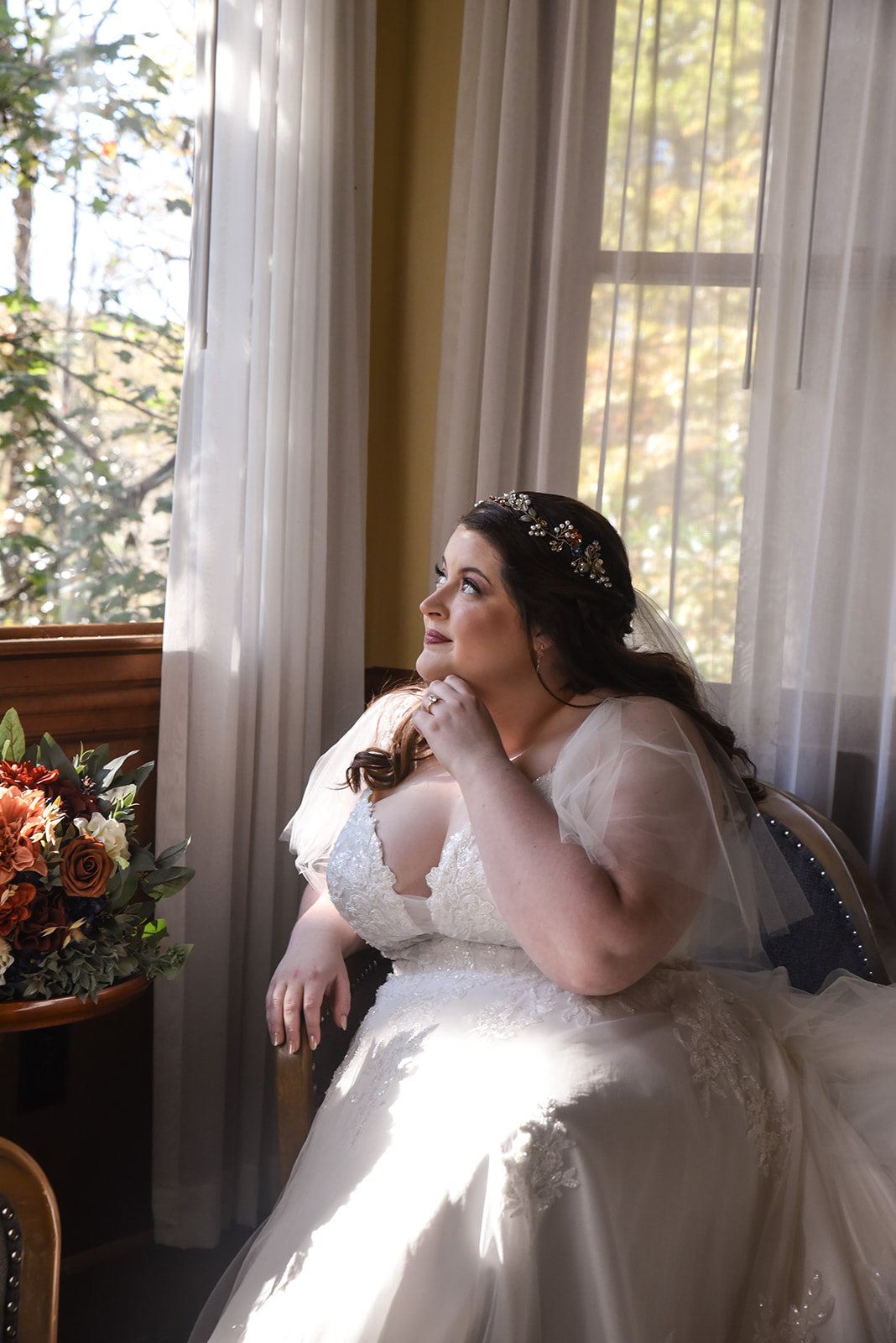
Tunnel Hill is not for every couple, and I mean that as a compliment to the couples who choose it. It requires a certain willingness to see past convention — to choose a railroad tunnel over a barn, stone over white-washed wood, industrial heritage over pastoral elegance. The couples who make that choice end up with photographs unlike anything their friends have. That’s the whole point of knowing where the real places are.
Tiffany Greeson Photography serves couples, families, and newborns throughout Northwest Georgia and the greater Southeast, including Tunnel Hill and surrounding communities of Calhoun, Rome, Cartersville, Dalton, Canton, Chattanooga (TN), Blue Ridge, Dahlonega, and beyond. Available for destination weddings throughout the Southeast and nationwide.
Ready to have your wedding photographed?
Send your date, venue, and a little about your day. I’ll come back with availability and next steps — usually within 24–48 hours.
Begin Your Inquiry