How to build a wedding-day timeline that actually works — a North Georgia photographer’s field guide.
Most wedding timelines I see online are written for stock weddings. They assume your getting-ready room has perfect window light, your venue is one location, and your family list is six people long. Mine usually isn’t either. After fifteen years of shooting weddings across Northwest Georgia, here is the timeline I actually build with my couples.
The single biggest predictor of whether a wedding day feels rushed or feels right is the buffer. Photographers who shoot a lot of weddings know that almost every part of the day takes longer than the venue coordinator’s template suggests — getting into the dress, last-minute family wrangling, the walk from the ceremony site to the portrait spot. Buffer is the answer. I build twenty extra minutes into every section of the day, and I haven’t run a wedding past schedule in years.
Start with the ceremony, then work backwards.
The ceremony time is the only fixed point in your whole day. Everything else is moveable. So that’s where I start when I’m helping a couple plan. I write the ceremony time at the center of a piece of paper, then work backwards: how long do you want for portraits? Family formals? Getting ready? Then I work forward: cocktail hour, dinner, dances, exit.
Working backwards instead of forwards is what keeps the day from drifting. When you start at “9 AM hair and makeup” and walk forward, every delay compounds. When you anchor at the ceremony and let the day breathe outward in both directions, you give yourself the buffer you need.
The four hours before the ceremony
If you’ve booked my six-hour package, I arrive about two hours before your ceremony. The hour and a half before that is yours and your bridal party’s. Here’s how I tell my couples to spend it:
Two hours before — getting ready
Hair and makeup should be finishing two hours before the ceremony, not still in progress. I’m walking in to photograph details — your dress on a beautiful hanger, the rings staged, your shoes, the bouquet — and I want enough light and enough quiet to get it right. If you’re still in the chair, I’ll wait, but it eats into the moments where I could be photographing your mom buttoning your dress.
One hour before — the dress
Plan to step into your dress about an hour before the ceremony. This gives us thirty unhurried minutes for “final getting ready” photos — your mom or sister doing up the back of your dress, the veil going on, the moment you see yourself in the mirror for the first time. Buffer.
Twenty minutes before — I stop
I always stop photographing the bridal suite twenty minutes before the ceremony. Guests are arriving, you’re walking down to the ceremony space, and I need to set up cameras for the processional. If we’re doing a first look (more on that below), this is when it happens.
If you don’t plan a first look, plan a buffer instead. Both work — neither is optional.
The first look question
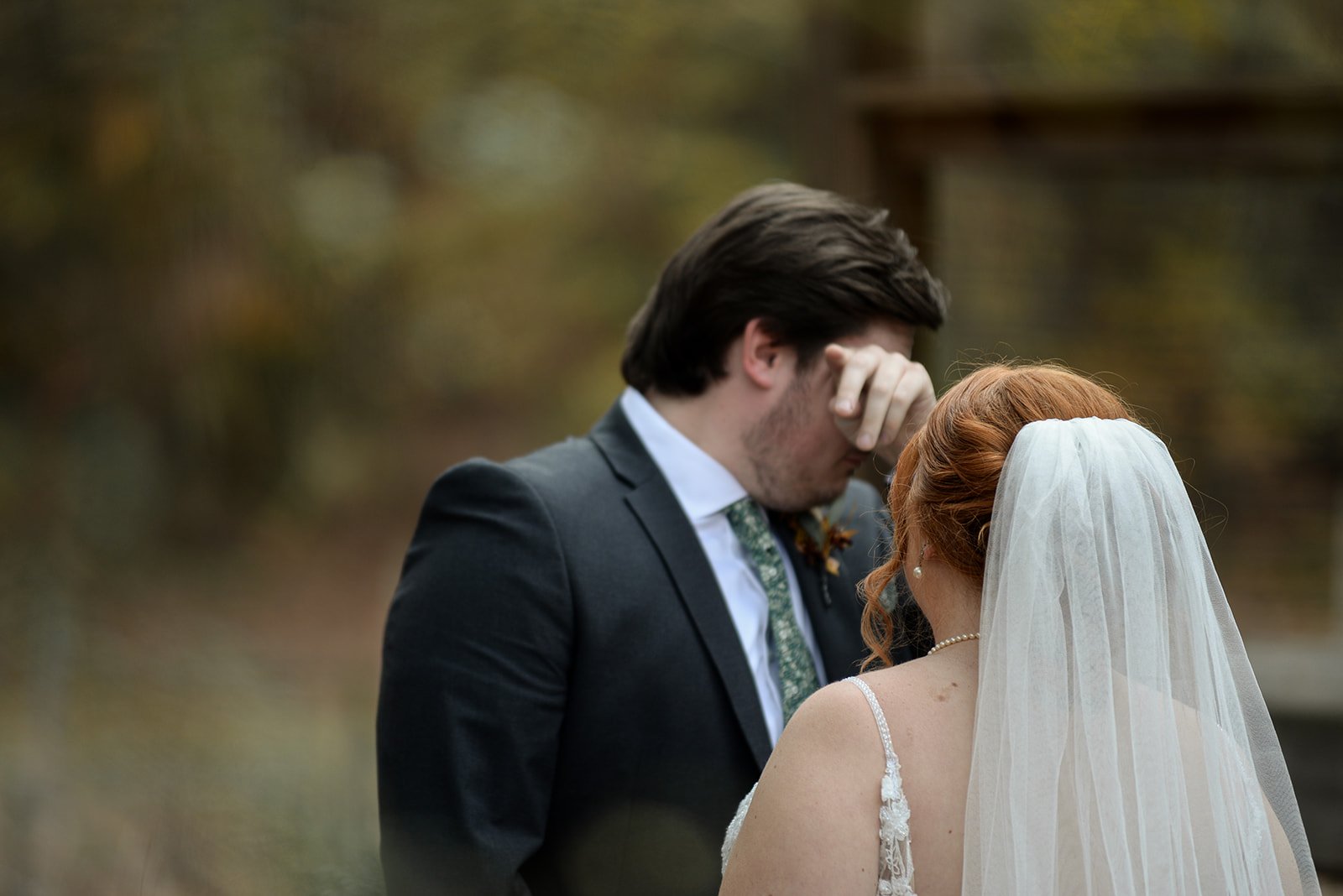
I’ll be honest: I love a first look. They’re not for everyone, but for the couples who choose them, they almost always change the day for the better. Here’s why:
- Couples photos taken before the ceremony almost always come out more relaxed than the ones squeezed into a fifteen-minute cocktail-hour window.
- You get a private moment together before the chaos starts. Most couples cry. Most couples then say it was their favorite five minutes of the day.
- You can finish wedding-party portraits and most couples photos before the ceremony, which means after the ceremony you only have family formals to do — and your guests don’t have to wait an hour for the reception to start.
- If your ceremony is later in the day (5 PM or later), a first look may be the only way to get portraits in good daylight.
If you’re not doing a first look, just be honest about it with yourself: you’re trading the photo time for tradition, and tradition is a perfectly good reason. Just plan an extra fifteen minutes of cocktail hour for portraits, and accept that we may need to extend your reception coverage a little.
Cocktail hour is photo hour
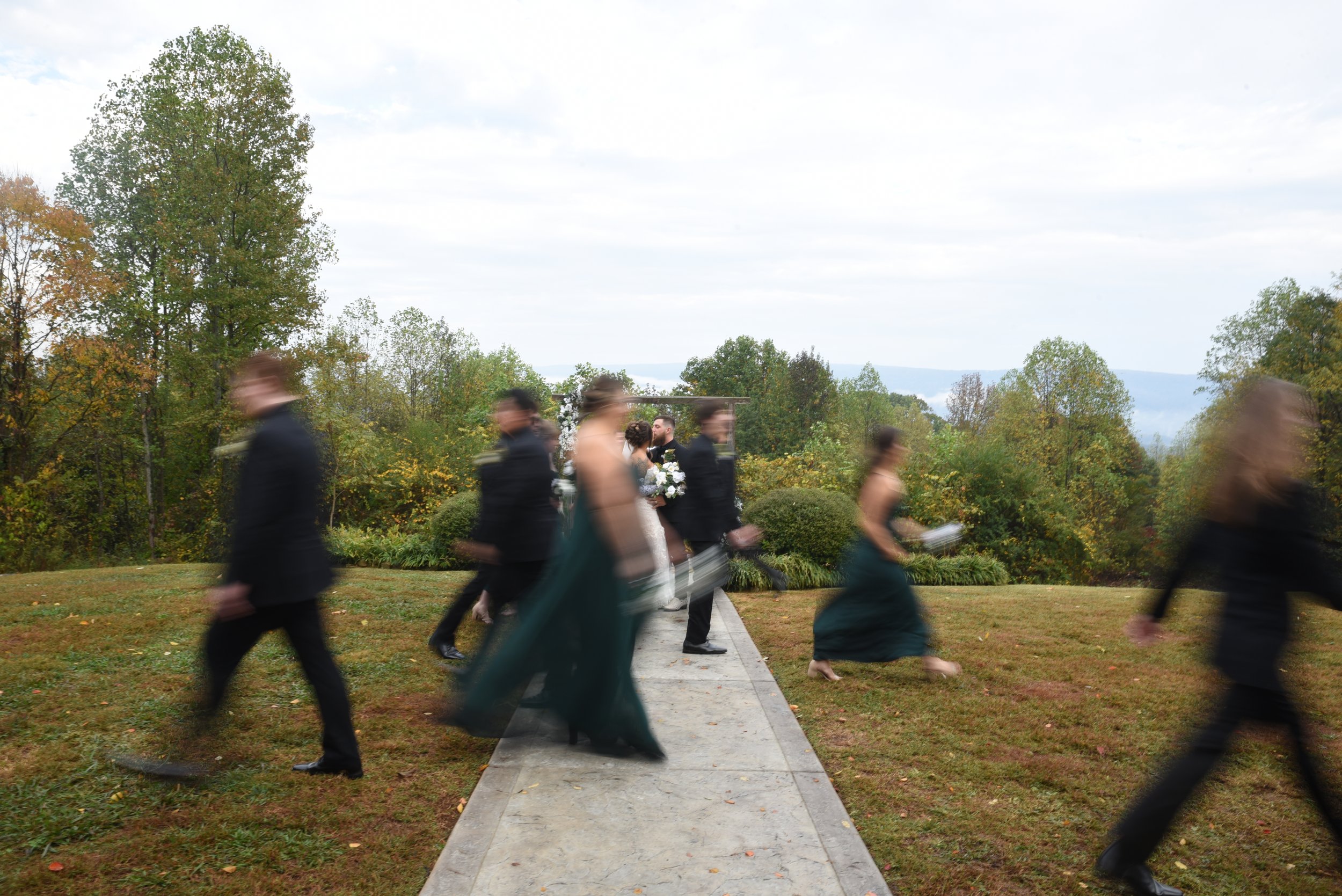
Right after the ceremony is when we shoot family formals and (if no first look) wedding-party and couples portraits. I allocate this in roughly twenty-minute blocks: twenty minutes for family, twenty for wedding party, twenty for the couple. Sixty minutes total — exactly the length of a standard cocktail hour.
Two things that ruin cocktail hour photo time, every single time:
Family lists longer than you said they’d be
Send me your family list two weeks before the wedding. Group it by side (“Bride’s family,” “Groom’s family,” “Both”). Designate one person per side as the “wrangler” — they know everyone and can call names to keep the line moving. A list of fifteen groupings runs about twenty minutes. Twenty-five groupings runs forty minutes and steals time from your couples portraits. Be honest about which photos matter most.
Receiving lines
I love a receiving line. I do not love a receiving line during cocktail hour. If you want one, do it as guests exit the ceremony or at the start of the reception — anywhere except the sixty minutes I need for portraits.
The reception belongs to your guests
By the time we sit down to dinner, the photo-heavy part of the day is done. Reception coverage is mostly about being ready when something happens — the toast, the cake cutting, the first dance, the mother-son and father-daughter dances, the moment the band gets the floor moving.
One trick that almost every wedding planner I respect uses: front-load the reception. Do toasts, cake cutting, and parent dances in the first ninety minutes. By the time my reception coverage starts winding down, all the must-photograph moments are already in the can. The last hour is dancing, mingling, and the energy of a real party — which photographs beautifully in its own right.
The fake exit, when you need one
If you’re booked for a 4 or 6 hour package and want a sparkler exit photographed, we may need to stage a “fake exit” earlier in the night. It feels strange the first time you hear about it, but it’s standard practice — most of your guests are still at the wedding, sparklers are lit, you walk through, you’re photographed leaving, and then you turn around and rejoin the reception. By the time the real exit happens, the photographer has already left for the day, and the moment lives forever in your gallery.
The timeline I’d build for a 4 PM ceremony
Here’s a real one — adapt as needed:
- 11:00 AM — Hair & makeup begins
- 2:00 PM — Photographer arrives, details & getting-ready coverage begins
- 3:00 PM — Bride steps into dress
- 3:15 PM — First look (if doing one)
- 3:30 PM — Wedding party + couples portraits (if first look)
- 3:40 PM — Photographer pauses, guests begin arriving
- 4:00 PM — Ceremony
- 4:30 PM — Family formals (20 min)
- 4:50 PM — Wedding party (20 min) [if no first look]
- 5:10 PM — Couples portraits (20 min) [if no first look]
- 5:30 PM — Reception begins, toasts & first dances
- 7:00 PM — Cake cutting, parent dances done
- 8:00 PM — Dance floor
- 8:30 PM — Photographer ends (six-hour package), or fake-exit photographed
I write a custom version of this for every wedding I book, because every venue has its own light, its own walking distances, its own family situation. But the structure stays the same: anchor on the ceremony, work outward, build buffer, and let the night belong to your guests.
If you want help thinking through your timeline — even before you’ve booked a photographer — send me a note. Wedding-day timeline planning is included free with every package, and I’d rather you have it than not.
Photographing weddings across Calhoun, Dalton, Cartersville, Rome, Chattanooga, Atlanta, Huntsville, and the surrounding Northwest Georgia region — and as a destination photographer anywhere in the United States.
Want help mapping your wedding day?
Send your ceremony time, venue (if you have one), and rough headcount. I’ll come back with a draft timeline tailored to your day — no commitment, no charge.
Send a Note